
Dog Matting in Hair: What It Looks Like, Why It Happens, and How to Prevent It
If you’ve ever run your fingers through your dog’s coat and felt a tangle, you’ve already encountered the early stages of matting. Mats in dog hair can range from tiny knots that are easily brushed out to dense layers of compacted fur that cover the body like a second skin.
Matting is common in many coat types and can happen to even well-loved pets. Understanding what mats look like and how they develop can help you keep your dog comfortable and their coat healthy.
At Dog Crafters Grooming Salon, we work with dogs at every stage of coat care and are always happy to help pet owners learn the best ways to maintain their dog’s hair at home.
What Is Dog Matting?
A mat is a section of hair that becomes tangled and knotted together. Over time, loose hair, dirt, friction, and moisture cause the coat to tighten into clumps.
These tangles usually begin in areas where hair rubs together frequently, such as:
- Behind the ears
- Under the collar or harness
- Under the legs
- Around the tail
- Between the toes
- Around the neck
- On the chest and belly
Mats can form gradually and may be difficult to spot, especially in thick or curly coats.
What Different Levels of Matting Look Like in Dog Hair
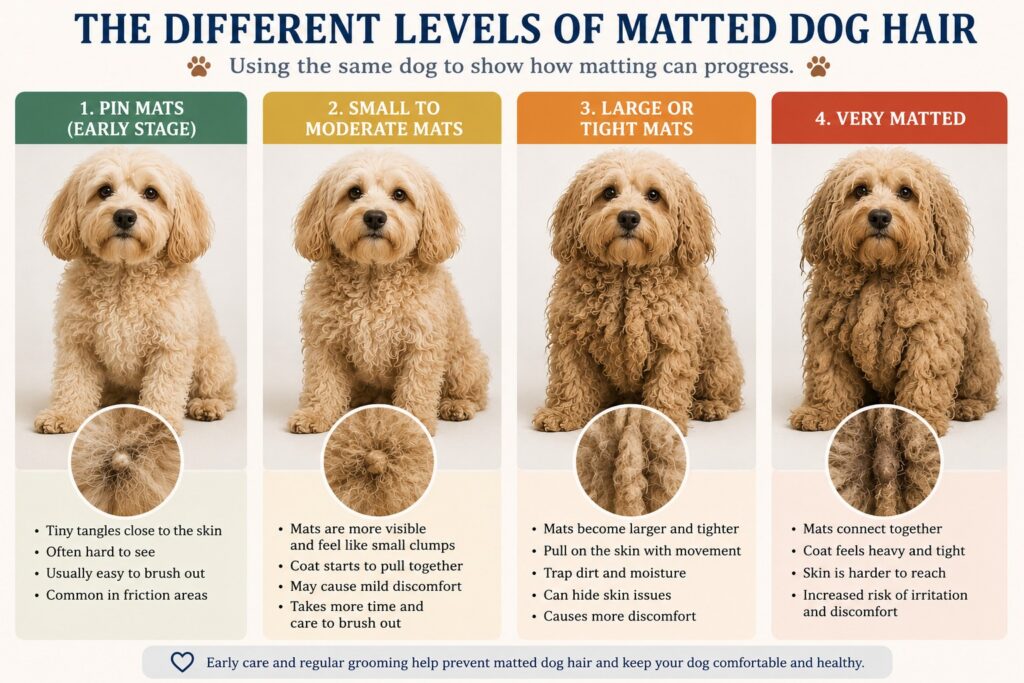
Pin Mats (Early Stage)
Pin mats are tiny, pencil-width tangles close to the skin. They may feel like small bumps hidden beneath the outer coat.
These early mats:
- Are usually easy to brush out
- Cause minimal discomfort
- Often appear in friction-prone areas
- Can develop into larger mats if left untreated
This is the ideal stage to address matting.
Small to Moderate Mats
At this stage, tangles become more noticeable and may feel like clumps of hair.
You may observe:
- Hair separating into sections
- Difficulty running a comb through the coat
- Tugging during brushing
- Mild discomfort when touched
These mats often require more time and careful brushing to remove safely.
Large or Tight Mats
Larger mats form when tangles continue to compact and tighten against the skin.
These mats:
- Pull on the skin continuously
- Restrict natural movement
- Trap dirt and moisture
- Can hide skin irritation beneath them
Dogs may become sensitive when these areas are touched.
Pelted Coat (Severe Matting)
A pelted coat occurs when mats connect together to form a dense layer over large portions of the body. The coat may feel like a thick blanket or shell attached directly to the skin.
In these cases:
- Airflow to the skin is reduced
- Moisture becomes trapped
- Skin irritation may develop
- Movement can be restricted
- Circulation may be affected when mats are extremely tight
At this stage, the safest and most humane solution is usually a full shave so the skin can be cleaned and the coat can grow back healthy.
Why Matting Is Uncomfortable for Dogs
Mats are more than cosmetic. As they tighten, they pull on the skin with every step your dog takes.
This constant tension can:
- Cause soreness and tenderness
- Limit movement
- Trap moisture and debris
- Lead to hot spots and skin irritation
- Conceal parasites
- Reduce circulation when mats become very tight
Removing mats early helps prevent discomfort and supports overall skin health.
Which Dogs Are Most Prone to Matting?
Some coat types require more frequent maintenance than others.
High-Maintenance Coats
These coats mat quickly and usually need daily or near-daily brushing:
- Poodle
- Goldendoodles
- Labradoodles
- Bichon Frise
- Shih Tzu
- Maltese
- Yorkshire Terrier
Long or Silky Coats
These coats benefit from frequent brushing:
- Cocker Spaniel
- Afghan Hound
- Havanese
Double Coats
These dogs can mat when loose undercoat becomes trapped:
- Golden Retriever
- Australian Shepherd
- Bernese Mountain Dog
How to Prevent Mats in Dog Hair
The good news is that most matting can be prevented with regular home care and routine grooming.
Brush Your Dog on a Consistent Schedule
Daily Brushing
Recommended for:
- Poodles and doodles
- Bichon Frises
- Long-coated breeds
2–4 Times Per Week
Recommended for:
- Shih Tzus
- Maltese
- Havanese
- Spaniels
Weekly to Twice Weekly
Recommended for:
- Golden Retrievers
- Australian Shepherds
- Other double-coated breeds
The correct schedule depends on coat length, texture, and lifestyle.
Use the Right Tools for Your Dog’s Coat
Slicker Brush
Best for:
- Curly coats
- Doodles
- Poodles
- Long-coated breeds
Metal Greyhound Comb
Used to confirm that the coat is tangle-free all the way to the skin.
Undercoat Rake
Best for:
- Double-coated breeds with heavy shedding
Pin Brush
Good for:
- Fine, silky coats
Detangling Spray
Helps reduce friction and makes brushing more comfortable.
Brush All the Way to the Skin
Many owners brush only the surface of the coat. While the top may look neat, mats can remain hidden underneath.
Use a technique called line brushing, where the coat is parted into sections and brushed layer by layer from the skin outward.
Finish by running a metal comb through the coat. If the comb glides easily, the area is mat-free.
Dry Your Dog Thoroughly After Getting Wet
Water alone does not cause mats in dog hair, but moisture left in the coat allows tangles to tighten.
Always dry thoroughly after:
- Baths
- Swimming
- Rainy walks
- Outdoor play in damp conditions
Drying Tips
- Towel blot rather than rub.
- Use a pet-safe dryer or cool hair dryer setting.
- Brush while drying.
- Ensure dense areas are fully dry.
Doodle and double-coated breeds are especially prone to moisture-related matting.
Schedule Professional Grooming Regularly
Routine grooming helps prevent tangles from becoming severe.
Typical grooming schedules:
- Every 4–6 weeks for long or curly coats
- Every 6–8 weeks for moderate-maintenance coats
- Every 8–12 weeks for some double-coated breeds
At Dog Crafters in St. Petersburg, Florida, our professional groomers can recommend a maintenance plan based on your dog’s specific coat and lifestyle.
When to Seek Professional Help
If you’re unsure how to brush your dog, cannot get a comb through the coat, or notice tight mats close to the skin, professional help is the safest option.
At Dog Crafters Grooming Salon, we provide gentle coat care, mat prevention guidance, and customized grooming recommendations for every coat type.
We proudly serve dogs and their families throughout St. Petersburg and surrounding communities.
Learn More!
- Dog bathing guide (how often should you bathe your dog)
- De-shedding guide (managing your dog’s coat for better skin health)
- Nail trimming blog (complete dog grooming routine)
Contact Dog Crafters Today with questions or visit our website to book an appointment: 📍 3330 Dr M.L.K. Jr St N, St. Petersburg FL 33704 📞 (727) 440-7830 🌐dogcrafters.com